
Leave your information
*Name Cannot be empty!
* Enter product details such as size, color,materials etc. and other specific requirements to receive an accurate quote. Cannot be empty

SWRO Seawater Desalination Solution ---- Seawater Desalination Reverse Osmosis System for Water Purifier

2024-10-30
S11wxo

SWRO Seawater Desalination Solution ---- Seawater Desalination Reverse Osmosis System for Water Purifier

Water is the source of life, a precious and irreplaceable natural resource for human beings, and the lifeblood of social and economic development. The lack of water resources and the increasingly serious water pollution have become the bottleneck restricting social progress and economic development. In addition to the scientific management and optimal allocation of water resources, it is also very crucial to give full play to the role of high-tech means in water reuse. Seawater desalination is an important system to solve the lack of water resources. So far, there have been dozens of seawater desalination methods, mainly including distillation, membrane method, electrodialysis method and freezing method. Among them, the reverse osmosis (SWRO) method of membrane method is the fastest developing, the lowest investment, the most energy saving and the lowest cost desalination technology. Reverse osmosis system is an efficient and environmentally friendly water treatment technology, which is widely used in seawater desalination, industrial water treatment, drinking water purification and other fields.

S125gu


The working principle of reverse osmosis seawater desalination system is mainly based on membrane separation technology. Membrane separation technology is a kind of technology to separate and purify different substances by selectively passing through polymer films. In reverse osmosis desalination systems, the polymer film is an asymmetric structure composed of a dense cortex and a loose supporting layer. The dense cortex is the filter layer of the membrane and has a micrometer-level pore size that prevents most suspended matter, dissolved matter and microorganisms from passing through. The loose support layer is the supporting layer of the membrane, which has a large pore diameter and can ensure the overall mechanical strength of the membrane.

Seawater desalination reverse osmosis system process flow
Reverse osmosis seawater desalination (SWRO) systems have become an important technology in the field of seawater desalination, providing a sustainable solution to the increasingly serious global water shortage problem. The seawater reverse osmosis process involves several key steps to ensure high-quality drinking water is produced from seawater. Understanding the flow rate of a reverse osmosis system is critical to understanding its desalination efficiency and benefits. The system process includes the following steps: 1.Primary filtration: Raw seawater first passes through the primary filter to effectively remove large particles, suspended solids and some impurities. This step is crucial to prepare the seawater for further processing, ensuring that subsequent processing is more efficient.

S13erl
S14nn3

2. Secondary filtration: The primary filtered water passes through the activated carbon filter for secondary filtration. The purpose of this stage is to remove harmful substances such as organic matter and residual chlorine, further purify seawater, and prepare for the next stage of treatment. 3. Precision filtration: The water is then precision filtered through a precision filter to further remove particles, bacteria and other impurities. This step ensures that the water is thoroughly purified before entering the heart of the reverse osmosis process. 4. Reverse Osmosis Membrane: The precision-filtered water is then directed through the reverse osmosis membrane, which is a key component of the system. Reverse osmosis membranes help separate and remove salts, organics, heavy metals, and other substances to produce pure, desalinated water. 5. Disinfection and Storage: After the water passes through the reverse osmosis membrane, it is disinfected to eliminate any remaining microorganisms. The purified water is then stored in tanks ready for distribution and use.

The advantages of reverse osmosis systems in seawater desalination are many. The system has the characteristics of high efficiency, environmental protection, energy saving and safety. Reverse osmosis technology can remove more than 99% of harmful substances such as salt, organic matter, heavy metals, etc., ensuring the production of pure water from seawater and solving the urgent need for fresh water resources. The environmental benefits of reverse osmosis systems are also significant. Unlike traditional seawater desalination methods, RO systems do not require a large amount of chemicals, do not produce wastewater, and are environmentally friendly. This sustainable approach to desalination aligns with global efforts to promote environmentally friendly water treatment and conservation solutions.

In addition to the environmental benefits, reverse osmosis systems are low maintenance, easy to operate, and suitable for a variety of water conditions. These properties make reverse osmosis systems a practical and reliable option for desalination, especially in areas with limited freshwater supplies. In summary, the process of a reverse osmosis system in desalination consists of a series of basic steps that ultimately produce pure drinking water from seawater. With efficiency, environmental benefits and adaptability, reverse osmosis systems are a key technology to address water shortages and ensure sustainable access to freshwater resources.

Infiltration and reverse osmosis

Reverse osmosis is the reverse process of osmosis. Permeability is a natural phenomenon. Water molecules in dilute solution will diffuse through the semi-permeable membrane to the side of concentrated solution at a relatively fast speed. As shown in the figure, the liquid level on the fresh water side will continue to decrease, resulting in a hydrostatic pressure difference. The difference in hydrostatic pressure at this point is called osmotic pressure (the osmotic pressure between the seawater and fresh water interface is about 2.4MPa).

S154i1

Reverse osmosis process is just the opposite. In SWRO, a pressure greater than the osmotic pressure of seawater on one side will cause the water molecules in seawater to pass through the membrane and the salt will be trapped. Theoretically, the greater the external pressure, the faster the reverse osmosis of water molecules in seawater will be. The core component of the reverse osmosis process is a synthetic semi-permeable membrane that allows almost only water molecules to pass through. The flat membrane of reverse osmosis membrane needs to be made into a certain configuration before it can be used in water treatment engineering. Nowadays, in seawater desalination, aromatic polyamide coil membrane element is mainly used.

S16qcd

The water producing diaphragm is inserted between the two flat membrane pieces, and the membrane layer is cemented together along the three edges of the membrane layer, and then combined with the water inlet diaphragm together and wound on the porous central tube. Finally, the perforated end cap is installed at both ends and encapsulated to make the rolled membrane element. Commercial reverse osmosis membrane elements come in a variety of specifications, with the most used membrane element in desalination having a diameter of 200mm and a standard length of 1000mm.

The water producing diaphragm is inserted between the two flat membrane pieces, and the membrane layer is cemented together along the three edges of the membrane layer, and then combined with the water inlet diaphragm together and wound on the porous central tube. Finally, the perforated end cap is installed at both ends and encapsulated to make the rolled membrane element. Commercial reverse osmosis membrane elements come in a variety of specifications, with the most used membrane element in desalination having a diameter of 200mm and a standard length of 1000mm.


The SWRO consists of a high-pressure pump, a pressure vessel, and an energy recovery device. After the seawater is pretreated and pressurized into the pressure vessel of the reverse osmosis unit by the high pressure pump, the seawater first passes through the first membrane element and flows in the inlet barrier channel of the membrane element which is spirally wound. Under higher pressure, part of the water molecules continuously penetrate through the membrane and enter the central tube of the coiled membrane element through the flow channel of the water producing barrier, generating product water. The rest of the incoming water continues to flow along the flow direction to the next membrane element. This process is carried out in turn. When the influent water passes through the next membrane element, the influent water concentration increases. When it flows through the last membrane element, the influent water becomes concentrated water.

S17nhl

Different from the thermal method, SWRO does not have the phase transformation process of evaporation and condensation. The main energy consumption of SWRO is the high pressure pumping energy to realize the reverse osmosis process, which makes the water production cost of reverse osmosis lower than that of the thermal method. In addition, compared with thermal method, its equipment also has modular structure characteristics and high process flexibility. The suspension and maintenance of local facilities can not affect the operation of the rest of the whole system. However, SWRO requires complex and fine pretreatment process, and different commercial membrane manufacturers have strict requirements on the SDI, pH, temperature, residual chlorine and other indicators of polyamide reverse osmosis membrane. When the pretreatment is not up to the standard, the pollution and scaling of the membrane surface will be accelerated, and the service life, energy consumption and product water quality of the membrane module will be affected in operation, thus increasing the cost of water production.

Different from the thermal method, SWRO does not have the phase transformation process of evaporation and condensation. The main energy consumption of SWRO is the high pressure pumping energy to realize the reverse osmosis process, which makes the water production cost of reverse osmosis lower than that of the thermal method. In addition, compared with thermal method, its equipment also has modular structure characteristics and high process flexibility. The suspension and maintenance of local facilities can not affect the operation of the rest of the whole system. However, SWRO requires complex and fine pretreatment process, and different commercial membrane manufacturers have strict requirements on the SDI, pH, temperature, residual chlorine and other indicators of polyamide reverse osmosis membrane. When the pretreatment is not up to the standard, the pollution and scaling of the membrane surface will be accelerated, and the service life, energy consumption and product water quality of the membrane module will be affected in operation, thus increasing the cost of water production.

S18602

Energy recovery device is another key equipment. The rapid development of SWRO is attributed to the use of energy recovery device with increasing efficiency in reverse osmosis system in addition to the continuous optimization of membrane materials and membrane components. Today, highly efficient PX-type pressure recovery units can recover more than 95% of the energy in concentrated water and pressurize it into seawater, reducing the energy consumption of the reverse osmosis process by almost half. The TDS of primary reverse osmosis effluent is about 300-500mg /L, which has met the limited requirements of the World Health Organization for drinking water TDS index (500mg/L). SWRO has been used for drinking water supply on a large scale in water-scarce areas. In the 1980s, SWRO began to compete with the traditional thermal process. Due to the advantages of low equipment investment, short construction cycle, low energy consumption and many other advantages, SWRO has developed rapidly and has become the most important process in the global desalination market. Currently, primary SWRO is mostly used in the municipal industry, which is why the capacity of reverse osmosis process is growing rapidly. Future research on reverse osmosis process will focus on the development of more energy-saving and durable new reverse osmosis membrane and membrane components, reduce operation energy consumption and maintenance costs, and reduce the cost of water production.S19qen
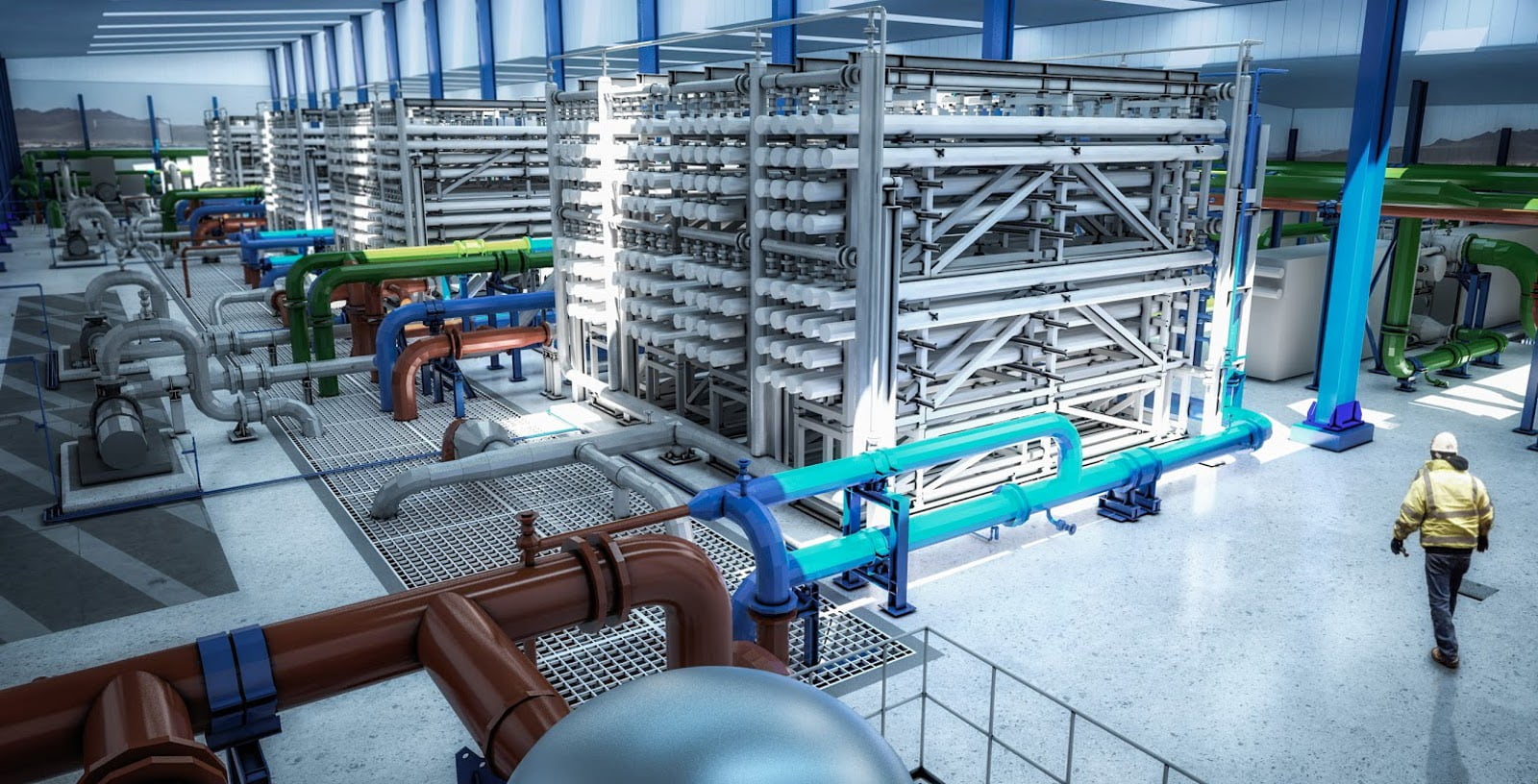
In practice, reverse osmosis system has become an important technology in the field of water treatment. For example, in the field of seawater desalination, reverse osmosis systems can effectively remove more than 99% of salt and other harmful substances from seawater, achieving efficient seawater desalination. In the field of industrial water treatment, reverse osmosis system can provide high-quality process water, improve production efficiency and product quality. In the field of drinking water purification, reverse osmosis system can remove various harmful substances in water and provide safe and healthy drinking water. In short, reverse osmosis system is an efficient and environmentally friendly water treatment technology with a wide range of application prospects. With the continuous development of science and technology, reverse osmosis system will continue to improve and optimize, to provide better quality drinking water and industrial water for human beings.